Is CELPIP Easier Than IELTS? An Honest Take
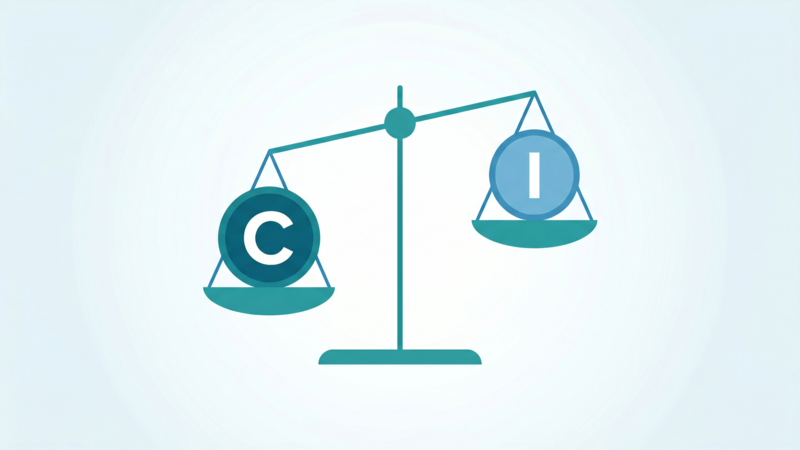
Short answer: yes, CELPIP is easier than IELTS. I've sat both, my wife has sat both, and the gap is bigger than most comparison articles let on.
Most 'which is easier' guides hedge because hedging is safe. I'm not going to. Three of the four sections genuinely favour CELPIP, and the fourth is roughly a wash. Here's where I think the real differences land.
Writing is where it's not even close
This is the section that decided it for me.
CELPIP writing is two short tasks. An email of 150 to 200 words and a survey response of 150 to 200 words. Both are everyday formats. You're booking time off, complaining about a faulty product, picking option A or B and explaining why. Get the tone right, hit the word count, and you're already in CLB 9 territory.
IELTS Writing is a 150-word letter plus a 250-word academic essay on a topic you've never thought about. Reaching Band 7 there is genuinely hard. My wife scored CLB 9 on CELPIP writing on her first sitting. Same person needed two attempts to crack Band 7 on IELTS. That's not a preparation gap. That's the test design.
Listening is easier if you live in Canada
The accent rules in CELPIP do most of the work for you.
CELPIP only uses Canadian and broader North American accents. That's a quiet but huge advantage if you live in Canada, watch CBC, or have spent any time on YouTube made by anyone who sounds vaguely North American.
IELTS pulls from British, Australian, American, and occasionally other accent families. Sometimes inside the same task. The vocabulary shifts too. Lift versus elevator, flat versus apartment, queue versus line. Your ear has to flip between dialect groups while you're also processing meaning. CELPIP just lets you listen.
Speaking is fairer on a computer
The computer format gets a bad rap it doesn't fully deserve.
I get the pushback on this one. Speaking into a microphone feels strange the first time. No reaction, no nod, no encouraging eye contact. Most people who try CELPIP speaking cold flinch at it.
But the alternative is worse. What happens when you get an IELTS examiner who's having a rough morning? You can't pick. I know someone who kept landing the same examiner and never broke past 7. Same person, same English, switched test centres, scored 8 on the next attempt. The face-to-face format introduces variance you can't study around.
The computer doesn't have a mood. And the awkwardness fades fast. Spend a week recording answers and you stop noticing the microphone is even there.
Reading is roughly even
This is where I stop arguing.
CELPIP Reading Part 3 (paragraph matching) and Part 4 (Viewpoints) are genuinely tricky. The dropdown options are written to feel almost right. IELTS has the same kind of trap with True, False, Not Given questions where a half-right answer eats your time. Roughly a wash. If reading is your strongest skill on either test, you'll be fine on both.
Sources & further reading
This take is based on personal experience, but the CELPIP facts behind it come from these official pages.
- CELPIP-General overviewOfficial overview of the CELPIP-General testOfficial CELPIPcelpip.ca
- Language test equivalency chartsOfficial CELPIP to CLB equivalency used by IRCCIRCC · Government of Canadacanada.ca
- Canadian Language BenchmarksCentre for Canadian Language Benchmarks, the CLB standardCLB · language.calanguage.ca
CELPIP vs IELTS: Common Questions
Quick answers to the questions most test-takers ask before choosing.
So if you're picking a test and your English sits around CLB 7 to 9, take CELPIP. Save yourself the IELTS essay.