CELPIP Reading Part 4: Reading for Viewpoints Strategy
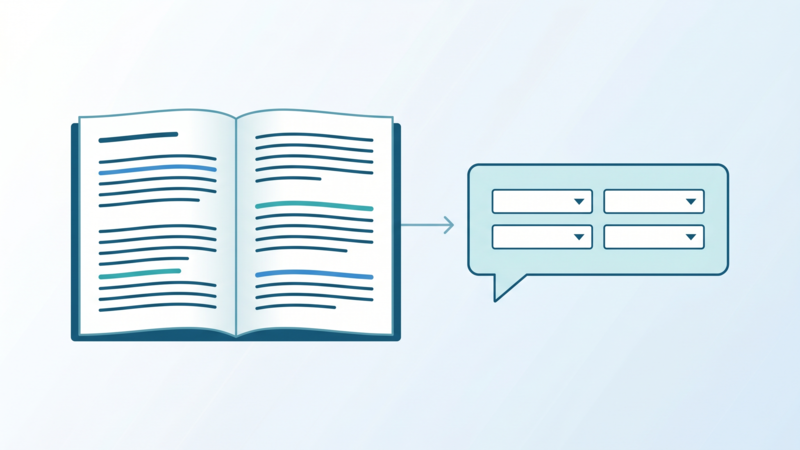
CELPIP Reading Part 4 is where careful readers stall. Ten questions across two pieces of writing, thirteen minutes on the clock. The first half feels like a regular comprehension test. The second half asks you to finish someone's argument for them, and that's where most scores fall.
The official name is Reading for Viewpoints. You read a magazine-style article making a case, then a reader's comment pushing back. The questions test whether you tracked both sides closely enough. For candidates targeting CLB 9 for Express Entry or CLB 7 for Canadian citizenship through IRCC, Part 4 is usually where the Reading band stalls.
Below: the format, a fast way to read the commenter's stance, the technique that beats the dropdown blanks, a worked example from a real Celpify passage, and a time budget that gets you through all ten questions before the timer turns red.
What Reading for Viewpoints Looks Like
CELPIP Reading Part 4 presents one opinion article of about 500 words, one reader comment of about 100 words, five multiple-choice questions, and five dropdown blanks, all inside a thirteen-minute timer. No other Reading part uses the dropdown format.
Part 4 has two pieces of text and two question styles. Most candidates assume the dropdowns are easier because they look short. They aren't. The blanks carry the same weight as the multiple-choice questions, and they test a different skill entirely.
| Element | Detail |
|---|---|
| The article | One opinion piece, roughly 450 to 550 words, with three or four named voices |
| The reader comment | A short response from a named reader, 80 to 120 words, with five blanks to fill in |
| Article questions | 5 multiple-choice items about the article's argument and the voices in it |
| Comment questions | 5 dropdown blanks inside the comment, each with four options |
| Time | About 13 minutes on the visible timer, no carry-over to other parts |
The voices in the article are almost always in conflict. Someone advocates a change. Someone pushes back. An expert weighs in. The MCQs ask which person said what, what the article's main argument is, and what surprised the speakers most. Standard comprehension territory.
The comment is where Part 4 turns. The reader almost always disagrees with the article, partly or fully. The blanks ask you to finish their argument, choosing from four near-identical options that reuse vocabulary from the article. Pick the wrong distractor and the comment makes a completely different point.
Part 4 carries more than a quarter of your Reading mark
How to Read the Commenter's Stance in Ten Seconds
To pin the commenter's stance in CELPIP Reading Part 4, read their opening clause as a stance flag, note their profession in the first two sentences, and circle tone words like unconvinced, skeptical, or doubtful. Those three signals tell you whether they agree or disagree before you open any dropdown.
The commenter is named at the top of the response. The first sentence is where they reveal which side they're on. Get that read right and the next four blanks slot in. Miss it and you'll fight every option.
Ever wonder why you ace the MCQs and then stall on the dropdowns? It's almost always the stance you missed in the first sentence of the comment.
1. Read the opening clause as a signal
Watch the very first words. While the article makes some good points... signals disagreement coming. I've been a teacher for fifteen years and... signals an opposing professional view. I admit the data is impressive... signals partial agreement, then a but. The opener is a stance flag, not a polite throat-clearing.
2. Pin the commenter's job or background
The reader almost always identifies themselves by profession or experience in the first two sentences. A manufacturing project manager won't see things the way a marketing consultant does. A long-term teacher will challenge a tech entrepreneur's view of classroom phones. Note the role. It tells you which arguments they'll buy and which they'll reject.
3. Listen for the tone words
Unconvinced. Skeptical. Doubtful. Concerned. Counter-tone words are the loudest single signal you'll get. Highlight them mentally as you read. They tell you the commenter's emotional posture toward the article, and that posture controls which blank options fit.
Solving the Dropdown Blanks Without Re-reading
The five Part 4 dropdowns rely on three distractor patterns: wrong attribution, wrong scope, and surface paraphrase. Pin the commenter's stance first and the four options sort themselves.
The dropdowns aren't testing comprehension of the comment in isolation. They're testing whether you can stay inside the commenter's stance while the distractors try to drag you back toward the article. These are the three distractor patterns Celpify's Part 4 question bank is built around.
Pattern 1: Wrong attribution
The option uses a phrase or claim from the article and slips it into the commenter's mouth. It sounds right because you remember reading it. But the commenter doesn't believe it. Reject any option that aligns the reader with someone they're arguing against.
Pattern 2: Wrong scope
The option says something true but unrelated to the point the commenter is making in that specific sentence. Test writers love this trap. The option is factually fine. It just changes the subject. Match the option to what the commenter is actually arguing in the sentence you're filling.
Pattern 3: Surface paraphrase
The option is a near word-for-word rewrite of something the article said. It looks like a confident answer because it echoes vocabulary you saw a minute ago. But it doesn't match the commenter's logic. Echoing the article is rarely the commenter's move.
One habit will save you here. Before you open the dropdown, predict the answer in your own words. Then read the four options and pick the one closest to your prediction. If none feel close, the wrong-attribution pattern is usually the trap.
Worked Example: The Four-Day Work Week
One real Celpify passage, three stance signals, one dropdown analysed.
The article (paraphrased setup)
A marketing agency owner named Katherine Morrison switched her firm to a four-day work week. Three years later, revenue doubled and employee turnover dropped 65 percent. A business consultant called Harold Chen had warned her the compressed schedule would lose her major accounts. A workplace researcher, Dr. Rebecca Santos, supports Morrison's approach with data from over 200 companies. Morrison closes the article saying the biggest surprise was the boost in innovation, not the numbers.
The reader comment (paraphrased opening)
Interesting article. I've been a project manager at a manufacturing company for eighteen years, and I have serious doubts about whether this approach would work in every industry. While I can see how a marketing agency might benefit from such a policy, [BLANK 1].
Apply the three stance signals before reading any option:
- Opening clause: While the article makes some good points, followed by but. Partial concession, full disagreement coming.
- Profession: manufacturing project manager. Different industry from the marketing agency in the article. That background tells you they're about to push back on whether the marketing case applies to factory work at all.
- Tone: serious doubts, while I can see... Polite, doubtful, firm.
Now read the four options for BLANK 1:
BLANK 1 dropdown options
- A. I have serious doubts about whether cutting one workday could really double revenue. Wrong scope. The blank has to set up the cross-industry contrast, not question the revenue numbers. The sentence right after is about manufacturing, not finances.
- B. I remain unconvinced that the dynamics of creative industries are in any way analogous to those of manufacturing. Correct. It uses the commenter's profession (manufacturing) and matches the cross-industry skepticism the opening clause set up.
- C. I admit that Morrison's streamlining of meeting rules is a worthwhile efficiency improvement. Wrong attribution. The commenter is pushing back, not praising. This option pulls them onto Morrison's side.
- D. I suspect that Morrison's team was simply underperforming before the schedule changed. Wrong scope. The commenter isn't questioning Morrison's prior performance. They're arguing the case doesn't transfer to other industries.
Answer: B. It's the only option that holds the commenter's stance and builds the bridge to the manufacturing sentence that follows.
You didn't have to re-read the article. The stance signals carried you to the option that fit.
Three Mistakes That Cap Your Part 4 Score
The three most common Part 4 mistakes are reading the comment as neutral, word-matching instead of stance-matching, and parking on a single dropdown for more than ninety seconds.
1. Reading the comment as neutral commentary
If you skim the opening and assume the commenter is being balanced, every blank will look fifty-fifty. The reader is almost always opposed to the article, partly or wholly. Walk in expecting a counter-argument and the options sort themselves.
2. Word-matching instead of stance-matching
Spotting a familiar word from the article in an answer option feels like a confident pick. It's a trap. Test writers reuse vocabulary in distractors specifically because word-matchers go straight for them. Match the commenter's argument, not their vocabulary.
3. Parking on one blank for three minutes
A stubborn blank can eat your whole budget. Set a ninety-second ceiling per blank. If nothing fits cleanly, mark a best guess, note the blank number on your scratch pad, and come back later. CELPIP doesn't dock you for wrong answers, so a guess at twenty-five percent beats blank space.
Thirteen minutes, no carry-over
A Working Thirteen-Minute Time Budget
A workable Part 4 split: 3 minutes reading the article, 3 minutes on the multiple-choice questions, 1 minute reading the comment, 5 minutes on the dropdowns, and 1 minute for review.
The split below is the one we see hitting consistent CLB 8 and 9 scores on Part 4. Thirteen minutes feels tight the moment the article reveals itself at 500 words, so the plan matters.
- 3 minutes: read the article once, slowly enough to register the named voices and their positions. No skimming yet.
- 3 minutes: answer the five multiple-choice questions in order, looking up phrases in the article as needed.
- 1 minute: read the reader comment in full before opening a single dropdown. Pin the stance.
- 5 minutes: work the five dropdowns, predicting each blank in your own words before reading options.
- 1 minute: review flagged questions and fill any guesses.
Three principles drive the split. Reading the article once slowly is faster than skimming it twice. Pinning the commenter's stance before opening any dropdown stops you from re-deciding the stance on every blank. And a wild guess at twenty-five percent always beats a blank.
Keep exploring: CELPIP Listening Part 5: Discussion Strategy
Sources & further reading
Confirm the Part 4 format and practise the viewpoints section with these official CELPIP pages.
- CELPIP-General Test FormatOfficial source for the test's section structure and timingOfficial CELPIPcelpip.ca
- CELPIP Free Practice TestsOfficial free practice tests from CELPIPOfficial CELPIPcelpip.ca
CELPIP Reading Part 4: Common Questions
Answers to frequent questions about the viewpoints section of CELPIP Reading.
Two pieces of writing, ten questions, thirteen minutes. Pin the commenter's stance in the first sentence, predict each blank before opening the dropdown, and Part 4 becomes the ten questions you walked in with a plan for.